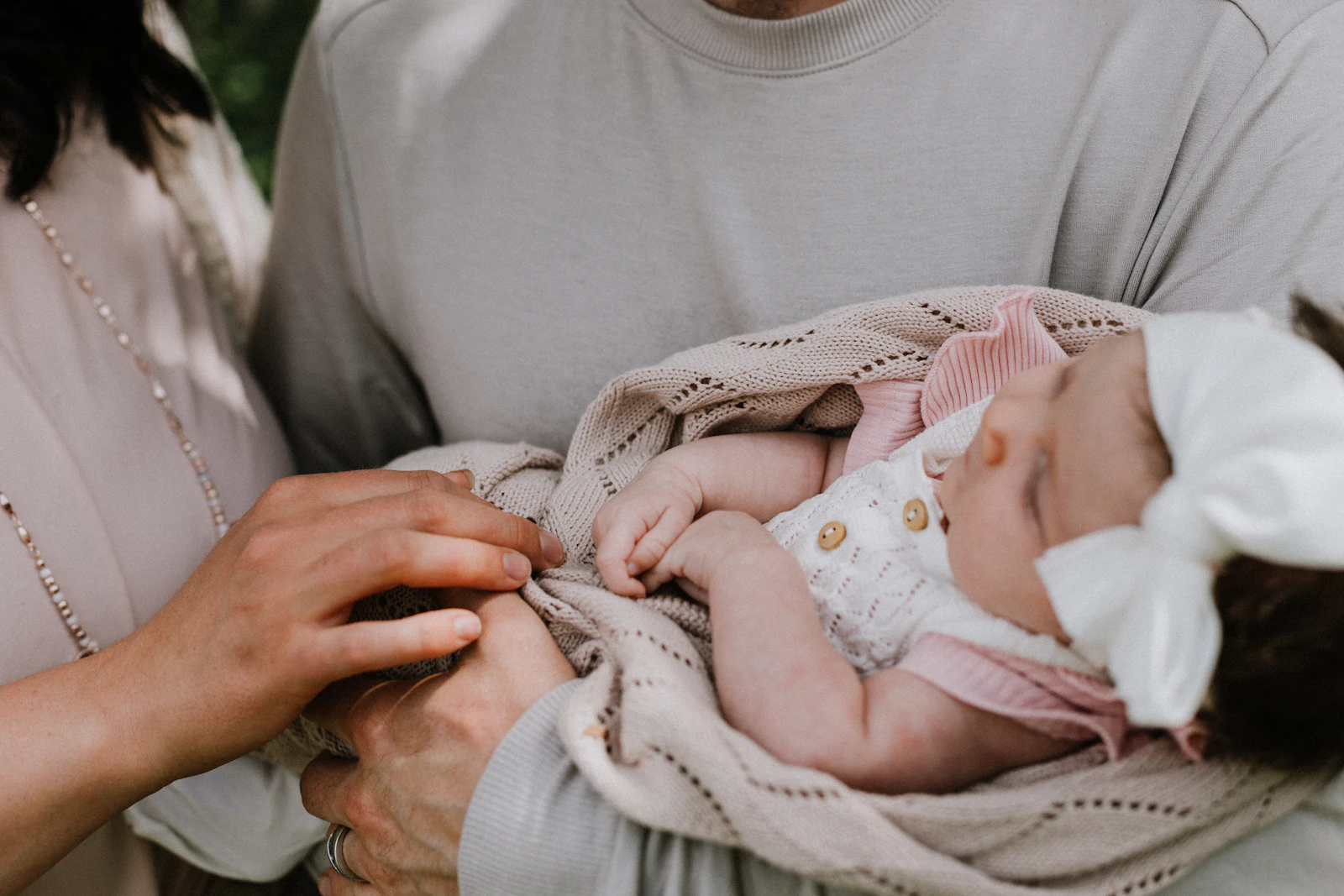
How adoption works in Washington, what open adoption means, the help you can get, and where to start. 17 min · 10 lessons
Lesson 1
A loving choice
Choosing adoption is not giving up. It is making a plan: choosing a family for your child, and giving your child a life you chose on purpose. In an open adoption it can also mean staying part of your child’s story. That is why many people now say “make an adoption plan” or “place a child” and not “give up.”
The decision is yours. A federal guide for expectant parents says: “While it’s good to talk things through with friends and family, ultimately, the decision is yours to make.”
It doesn’t have to mean goodbye. In a 2022 survey by the National Council For Adoption, which was not a random sample, about 3 in 4 adoptive parents with a private adoption from 2011 to 2021 said they were in contact with their child’s birth family.
It is a rare and deliberate choice. There are roughly 20,000 to 25,000 private adoptions in the United States each year, well under 1% of births.
It is permanent. Once a judge approves your consent, which can happen within days of the birth, the decision can’t be undone except in rare cases. That is why this page tells you the hard parts along with the good ones.
OISHA is not an adoption agency. We don’t place children, match families, promise contact or money, or accept referral fees. We explain how adoption works and point you to licensed agencies. The choices are yours.
Lesson 2
How it works in Washington
You decide whether to go forward at every step, and you can stop at any point before a judge approves your consent.
Ask questions, with no strings. Call a licensed agency or an adoption attorney. The same federal guide puts it plainly: “Talking to an agency or lawyer does not mean you are committed to an adoption plan.”
Make your plan. With an agency you choose the family, you and they agree on how much contact there will be afterward, and you say what you want at the hospital.
Give birth. You are your baby’s legal parent, and every decision is still yours.
Sign your consent when you are ready. In Washington it can be signed before or after the birth, but it has no force until a judge approves it. A judge can’t approve it until at least 48 hours after the birth or after you sign, whichever comes later.
Change your mind if you need to. Until the judge approves your consent you can take it back for any reason, by writing to the court clerk whose address is on the form. That window can be short: a judge can approve a consent as soon as 48 hours after the birth.
After the judge approves it, it is final. Washington has no waiting period of days or weeks after that. A consent can then be undone only within one year, and only for fraud or duress by the person or agency that asked for it, or because the parent was not mentally competent when signing. There is one narrow exception: if you tell whoever took your consent, within 48 hours of the birth, that you are taking it back, you have 48 more hours to get a written revocation to the court clerk. Know the date of the hearing before you sign.
Your baby may go home with the adoptive family before the judge’s approval, if their home study is on file and the court allows it. You remain the legal parent until the approval. Ask your lawyer how and when your baby would come back to you if you changed your mind in that time.
Lesson 3
Open adoption
Most adoptions today are not secret. The federal guide says: “Today, most domestic adoptions involve some level of ongoing contact between adoptive and birth families.” That can mean letters and photos, calls, or visits for years.
Put it in the court order. In Washington an agreement about contact can be enforced only if its terms are written into a court order. You and the adoptive parents both have to agree in writing, and the judge has to find that the contact is good for your child. Ask your lawyer to have it entered before your rights end.
Know what it can and can’t do. If the agreement is broken, you can ask a court to enforce it, and the side that loses can be ordered to pay the other side’s attorney’s fees. A broken agreement never undoes the adoption. A court can change the agreement only if that is needed for your child’s best interests, and only if both sides agree or exceptional circumstances have come up.
Contact isn’t guaranteed for life. In a study that followed birth mothers for up to 20 years, contact had stopped for about 1 in 4 of them by the end. Federal guidance says a parent should not make an adoption plan based only on a promise of contact. Choose a family you would trust even if contact changed.
What the research suggests. In a study of 323 birth mothers 6 to 9 months after placement, those with more openness reported more satisfaction and better adjustment. The 20-year study, of adoptions made before 1992, found that most birth mothers still felt moderate or strong grief 4 to 12 years later, and that most felt some or none after 12 to 20 years. Mothers with contact reported less unresolved grief in the earlier years, the difference by openness was not statistically significant later on, and the hardest situation was contact that had stopped. These are patterns, not promises.
“Closed” is not sealed forever. At 18, a person who was born in Washington and adopted can ask the state for the original birth certificate, which names the birth mother, unless she has filed a form refusing. That form expires when she dies.
Lesson 4
The father, your family and your tribe
The father has rights. Washington requires the consent of both parents, including a man who may be the father. The exception is a pregnancy that a court has found came from rape, incest or sexual assault, and even then he is given notice. If the father doesn’t consent, a court decides whether to end his rights. It can do that if he doesn’t respond to the notice. If he objects, it takes clear evidence that he has failed to act as a parent and is withholding consent against the child’s best interests, or that he isn’t the father. Washington has no registry he must sign up with.
If you are the father and want to raise your child, act early. Sign an Acknowledgment of Parentage with the mother, or if she won’t sign, open a parentage case, which can be started before the birth. Notice of an adoption can come by mail or in a newspaper, not only in person. Answer within 20 days (30 if you are served outside Washington) and go to the hearing. If you don’t, your rights can be ended, and that can’t be reopened later. You can ask for a lawyer if you can’t afford one. See Becoming a dad.
If you are under 18, the decision is still yours. The court appoints a guardian ad litem, an independent person who is not a relative, to talk with you and report to the judge on whether your consent is voluntary and understood. Washington’s adoption law does not list your parents’ consent among those required. Ask a lawyer how that applies to you.
If your baby may be a member of a tribe, or eligible to be, tell the agency or attorney right away, because different rules apply. Consent has to be given before a judge, it can’t be given until more than 10 days after the birth, the tribe is notified, and you can withdraw your consent for any reason until the court enters its final order.
Lesson 5
Money and help
The agencies listed below say their services cost you nothing, including counseling and legal help.
Medical and legal costs can be covered. Washington law allows an adoptive family to pay the medical costs of your pregnancy and birth, and the legal fees and court costs. Apple Health also covers pregnancy care for those who qualify by income.
Other help is less clear-cut. The law names only medical and legal costs. Some agencies say they can also help with living costs, and those that explain how say a court approves it. Ask how any help is approved, and get it in writing.
Help never buys a baby. Paying or taking money for a child is a felony in Washington. Accepting lawful help does not make your consent binding: it stays yours to give, or to take back, until a judge approves it. The federal guide says you “should not feel pressured by earlier discussions, payment of expenses, or what the prospective adoptive parents and others hope and want.” Ask each agency, in writing, what happens to that help if you decide to raise your child.
Your own coverage. If you qualify, Apple Health’s after-pregnancy coverage lasts 12 months however a pregnancy ends, and it covers counseling.
Lesson 6
Grief is part of it
Placing a child is an act of love, and it is also a loss. A federal guide says birth parents “tend to experience intense grief at the time of the adoption, and that grief may reemerge periodically,” for example on the child’s birthday. Feeling it does not mean you chose wrong.
What birth mothers say. In a 2022 survey of 1,160 birth mothers by the National Council For Adoption, which was not a random sample, 63% said they were satisfied with their decision, 15% were neutral and 22% were dissatisfied. In another survey, of 223 birth mothers and also not a random sample, satisfaction was lower the more time had passed, and higher among mothers who still had contact with their child.
Ask for counseling. In the larger survey, about two in three birth mothers said they had needed counseling, and fewer than half had received it. Each agency below says it offers free counseling. Ask whether it continues after placement, and for how long.
Shared Journeys Collective. Free weekly online support groups and help finding a therapist, for anyone whose adoption placement is final: 224-858-6933.
BraveLove. Birth mothers’ stories, and a directory of support groups: bravelove.org.
Someone to call. Perinatal Support Washington’s warm line is 1-888-404-7763, answered live on weekdays from 9 to 4:30. The National Maternal Mental Health Hotline is 1-833-852-6262, free, 24/7. In a crisis, call or text 988.
Lesson 7
How adopted children do
Most children who are adopted do well, and you deserve the whole picture.
A British study followed people born in 1958 and in 1970 who were adopted as babies. In middle age their health and well-being were similar to everyone else’s, and they had more behavior problems than the general population.
In a national survey of adopted children of all ages, they were more likely than other children to have health insurance, regular checkups and a parent who read to them every day. They were also more likely to have special health needs, learning disabilities and developmental delays.
In a Minnesota study of teens adopted as babies, most were psychologically healthy. They also had about twice the odds of a behavior disorder and of having seen a mental health professional, and about four times the odds of a reported suicide attempt. The behavior differences were larger for teens adopted within the United States than for those adopted from abroad.
What that means for you: look for a family that will be honest with your child about adoption, that welcomes your place in the story, and that will get help when help is needed.
Lesson 8
Where to start
Each of these agencies is on Washington’s list of child-placing agencies, and each is described in its own words. Calling doesn’t commit you to anything.
Redmond
Antioch Adoptions
A Christian agency that says it charges nothing to birth parents or to adoptive families, and that places children with married Christian couples. It offers counseling, help arranging prenatal care, referrals for housing, legal help, support at the hospital, your choice of family, and counseling and groups afterward. Its materials describe abortion and its risks, and it says it does not provide or refer for abortions.
Says it offers options counseling, your choice of family, birth mother mentors, support after the birth and continued counseling, at no cost, and that it encourages open adoption. Be aware: its website describes abortion as one of three choices, calling it not a simple decision, and its resource list includes Planned Parenthood and pregnancy centers.
Says it will come to you anywhere in Washington, that you choose the family and how open the adoption is, and that it provides free counseling and an attorney at no cost to you. It also places children with families in other states.
Other licensed agencies are on the state’s list of child-placing agencies. You can also work directly with an adoption attorney. The Washington State Bar explains how to find one on its Find Legal Help page.
Questions to ask every agency
Is every service free to me, whatever I decide?
Can I choose the family, and meet them? Where do they live?
Will our contact agreement be written into the court order?
Who will my lawyer be, and who pays?
What counseling do I get afterward, and for how long?
Will you come to Orcas, or meet by video?
For a crisis at any hour, the National Safe Haven Alliance answers calls and texts: 1-888-510-2229. In an emergency, call 911.
Lesson 9
Who to be careful with
Most people in adoption are trying to help. Three things should make you stop and check.
Anyone who isn’t licensed in Washington. The Federal Trade Commission warns that unlicensed adoption intermediaries, sometimes called advertisers, facilitators or brokers, “are not licensed adoption agencies. That means they’re not supervised by their state or bound by its educational, social work, or legal training requirements.” An agency licensed in another state may not be allowed to work with you here. Ask whether it is licensed in Washington, and check the state’s list of child-placing agencies before you share your story.
Anyone who leads with money. Be wary of an ad that offers cash or a trip to another state before it offers counseling. Buying or selling a child is a felony in Washington, and if you give birth in another state, that state’s rules may apply to you in place of Washington’s. Lawful help with living costs does exist, and the agencies that describe it say a court approves it.
Pressure, in any direction. The federal guide for expectant parents says to look for someone who can guide you “in an unbiased way and counsel you without gaining personally from the decision you make.” An agency with families waiting has a stake in what you decide, so notice whether you are being listened to or sold. Being told you must repay help if you change your mind, or being handed a family without any say, is a reason to walk away.
Know who you are calling
Everyone who counsels pregnant women has a point of view, and that includes us: OISHA hopes every mother will choose life for her baby. The services below are lawful, and the first two are on Washington’s list of licensed agencies. We name them so that you know before you call.
Be aware: each of these presents abortion, which ends a baby’s life, as one of a mother’s options.
Open Adoption & Family Services describes its counseling as a neutral space to explore parenting, abortion and adoption, with no option advocated, and describes itself as pro-choice. It does not provide abortions.
Choice Adoptions says its advocates will talk through parenting, adoption or abortion, and that it sends anyone seeking an abortion to a medical provider.
The All-Options Talkline is a free peer line for talking through abortion, adoption, parenting or loss. The group that runs it also runs a fund that helps pay for abortions.
Planned Parenthood does not present itself as an adoption service. Its health centers in Mount Vernon and Bellingham provide abortions and list adoption referrals. Nationally, its latest annual report counts 434,450 abortion procedures and 3,038 adoption referrals in the year ending September 2024.
Our opinion, and it is only that: because an abortion can never be undone, we think a mother who is frightened and unsure is better served by counselors who will not put it on the table. Whoever you call, you can say at the start that you have decided against abortion.
Lesson 10
If you need time, not adoption
Adoption is permanent. If what you need is time to get on your feet, Washington has other legal tools. Ask a lawyer or an advocate which one fits.
A power of attorney. A parent can hand the day-to-day care of a child to someone she trusts for up to 24 months, without giving up her rights.
A guardianship. A court can appoint a relative or friend as guardian if each parent consents. You keep the rights the order names. Only a court can end it, and it can refuse if ending it would harm the child.
A voluntary placement. In a few situations, and only if the state’s child welfare agency agrees it is needed, a child can be placed in foster care for a limited time while a parent gets back on her feet.
Safe Haven, in an emergency. A parent can hand a newborn less than 72 hours old to staff at a hospital emergency department, at a fire station while firefighters are there, or at a federally designated rural health clinic during its hours. Orcas Island Fire & Rescue says its Eastsound station is a Safe Place for Newborns on weekdays from 9:30 a.m. to 4 p.m. Staff can’t require your name, and you won’t be prosecuted for abandonment. Your baby gets medical care and goes into foster care. The state then tries to find the parents for the court case, and if no parent comes forward their rights can be ended. You would not choose your baby’s family, which is why calling an agency first gives you more say. If a baby is in danger, call 911.
Checked in November 2026 against Washington’s adoption statutes, the federal Child Welfare Information Gateway, each organization’s own website, and published studies, most of them read in summary. This page isn’t legal advice. An adoption attorney can tell you how the law applies to you.
Check yourself
Myth or fact?
Choosing adoption means you will never see your child again.
Myth. Most adoptions today include some contact, though it is not guaranteed. In Washington, a contact agreement can be enforced when it is written into the court order.
In Washington, you have 30 days after signing to change your mind.
Myth. There is no set number of days. You can take back your consent until a judge approves it, which can happen as soon as 48 hours after the birth. After that it can be undone only within a year, and only for fraud or duress by whoever asked for the consent, or because the parent was not mentally competent.
The baby’s father has to be given notice.
Fact. His consent is required, or a court has to decide whether to end his rights after giving him notice. A father who responds and has acted as a parent can stop the adoption.
A birth mother has to pay the agency.
Myth. The agencies listed here say their services cost birth parents nothing, and the law lets the adoptive family pay medical and legal costs.
Grief after placing a child means it was the wrong decision.
Myth. Grief is common after an adoption. A federal guide says counseling and support groups may help, and in some studies mothers in contact with their child reported less unresolved grief.
Questions people ask
Asked and answered.
Will my child think I didn’t want them?
In an open adoption your child can know you, and can hear from you why you made this plan: out of love. You can write a letter for your child to read later, and look for a family who will tell the story honestly.
Can I choose the family?
Each agency listed here says you choose the family. Ask to see more than one, ask to meet them, and ask whether they live close enough to visit.
What if my family wants a different decision than I do?
The decision is yours, and pressure in either direction is wrong. Ask a counselor to help you think it through, and expect not to be pushed.
I’m under 18. Do my parents have to agree?
Washington’s adoption law doesn’t list a parent’s consent among those required. The court appoints a guardian ad litem, an independent person who is not a relative, to make sure the decision is truly yours. It is a big decision to carry alone, so bring in an adult you trust, and ask a lawyer how the law applies to you.
Can I change my mind after the baby goes home with the adoptive family?
You can take back your consent until a judge approves it, and that can happen as soon as 48 hours after the birth, so the window may be short. After approval it is final in almost every case. Know the hearing date before you sign, and ask your lawyer how your baby would be returned.
Is a closed adoption secret forever?
No. At 18, a person who was born in Washington and adopted can ask the state for the original birth certificate, unless the birth parent has filed a form refusing, and that form expires when the birth parent dies. You can file a contact preference, or change it, at any time. See records and reunion.