

Quick exitExitEsc Esc

Module 07 · Relationships

Preparing for marriage

Choosing well, preparing together, and the legal steps in San Juan County. 12 min · 6 lessons

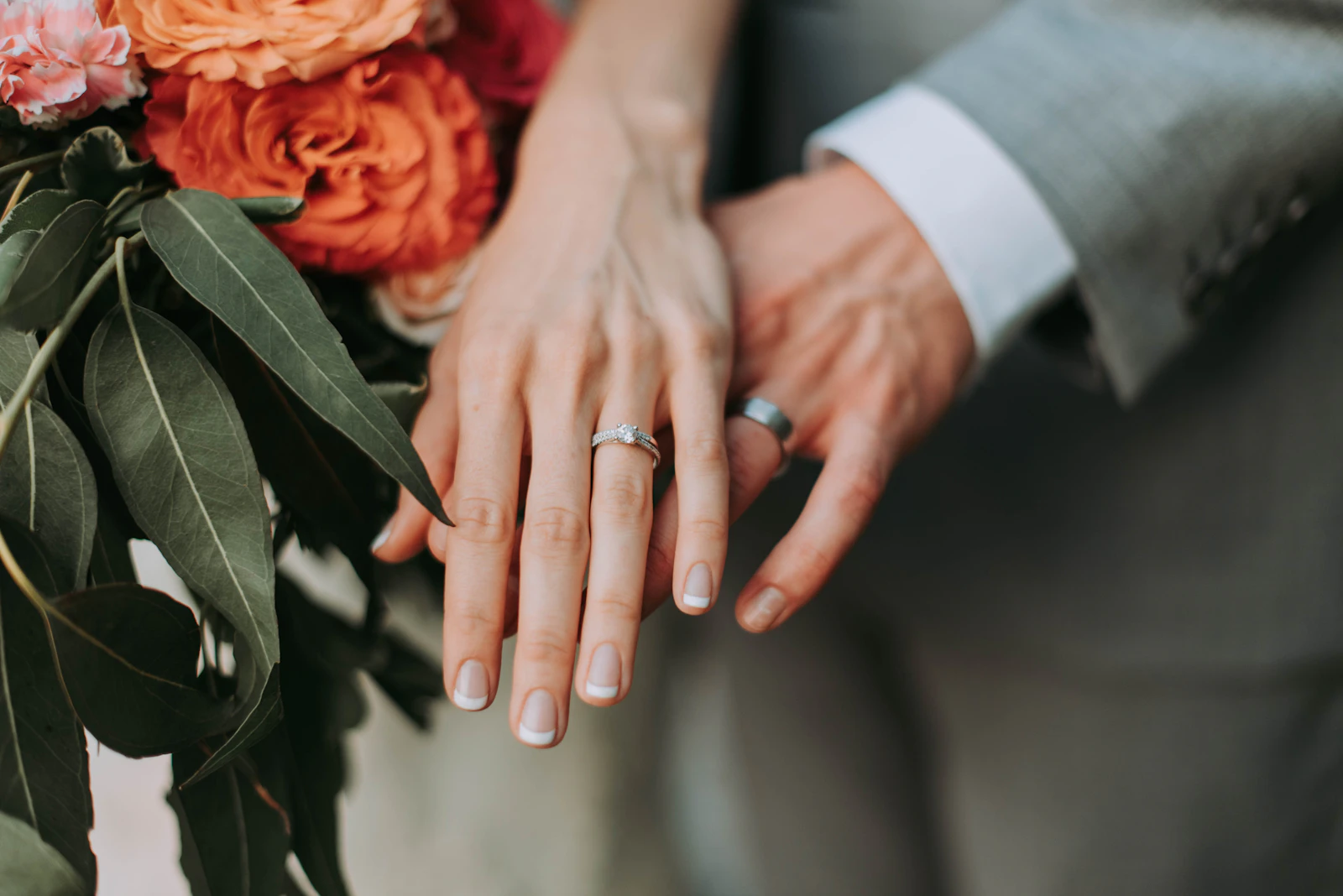
Two hands wearing wedding rings, resting together beside a bouquet

Lesson 1

A promise worth preparing for

Marriage is a promise to love and stand by one person for life. A wedding takes a day; a marriage deserves more planning than that. Preparing together is one of the most loving things a couple can do.

  • Preparing helps. In a survey of households in four states, couples who had premarital education reported more satisfaction and commitment, less conflict and lower odds of divorce. A review of 47 studies of premarital programs found that they improved how couples communicate, though not how satisfied couples said they were. A survey can’t prove cause and the research is mixed, but better communication is the gain that shows up most often.
  • Good marriages and good health go together. A national health survey of more than 127,000 adults found that married adults were generally healthier than other adults, and a review of 126 studies found that better marriages go with better health. Researchers add that healthier people may also be more likely to marry.
  • Children tend to do well in stable marriages. Most researchers agree that children raised by their two parents in a stable marriage do better, on average, on many measures, though they agree less about why. That is an average, not a verdict on any family: single parents and blended families raise thriving children every day, and good support makes a real difference.

Lesson 2

Decide, don’t slide

Researchers who study commitment describe two ways couples move forward: sliding and deciding. Sliding is drifting into a big step, like moving in together, because it was easy or expected. Deciding is talking it through and choosing on purpose. The idea is that each step a couple slides into makes it harder to leave a relationship that isn’t right, a pull the researchers call inertia. It is a theory, not a proven cause, but it’s a good question to ask yourselves: are we deciding, or sliding?

  • Living together first isn’t shown to protect a marriage. In a national survey from 2006 to 2010, 71% of women who had not lived with their husband before the wedding were still married 10 years later, compared with 67% of those who moved in while engaged and 61% of those who moved in before they were engaged. Those figures aren’t adjusted for other differences between couples, and newer studies disagree about whether living together makes any difference in recent marriages.
  • Commitment first. In a study of 1,050 married people, those who had lived together before getting engaged reported lower satisfaction and more thoughts of divorce than those who waited for engagement or marriage. The differences were small.
  • There’s no rush. In the same national survey, 54% of women who married before age 20 were still married 10 years later, compared with 69% who married at 20 to 24 and 78% who married at 25 or older.
  • Waiting is deciding. Choosing to wait for sex is one more way to decide instead of slide. See Waiting & the right person.

Lesson 3

Talk about these before the wedding

Premarital programs keep coming back to the same topics, because these are the places where marriages get tested. Take one at a time, and listen as much as you talk.

  • Money. What do we each earn, owe and spend? Who pays for what? In a study of 4,574 couples, disagreements about money predicted divorce more strongly than any other kind of disagreement.
  • Children. Do we want them, how many, and when? How were we each raised, and what would we keep or change? Some studies find that satisfaction dips after a first baby, so talk about sleep, work and help before you need them.
  • Faith and values. What do we each believe, how will we live it, and how will we raise children in it?
  • Family. How much time with each family? Whose house for the holidays? What happens when a parent needs care?
  • Work and home. Whose job decides where we live? Will we stay on the island? Who does which chores?
  • Health and history. Share what the other person deserves to know: past relationships, debts and health conditions. Getting tested for STIs before the wedding protects you both. See STIs & testing.
  • Intimacy and faithfulness. What are our hopes and worries? What does being faithful mean to each of us, including online?
  • Hard times. When we’re stuck, who will we ask for help, and will we both go?

Lesson 4

Disagreeing well

Every couple disagrees. What matters is how. In studies that followed married couples for years, those whose hard conversations were mostly negative, full of defensiveness, stubbornness and withdrawal, were more likely to split up, and the first few minutes of a difficult conversation said a lot about where the marriage was headed. These were small studies, later research hasn’t always found the same pattern, and none of it can predict what will happen to any one couple. But the habits they point to are worth practicing now:

  • Start gently. Say what you feel and what you need, without blame: “I felt left out when…”
  • Listen to understand. Say back what you heard before you answer.
  • Take a break when it gets heated, and agree on when you’ll come back to it.
  • Repair quickly. A sincere “I’m sorry” is strength, not losing.

Conflict is not the same as fear. If you feel afraid of your partner, or controlled, watched or put down, that isn’t a communication problem, and counseling together won’t fix it. Put the wedding plans on hold and talk with someone you trust. SAFE San Juans answers 24/7 at 360-376-1234, and the National Domestic Violence Hotline is 1-800-799-7233. See Healthy relationships & consent.

Lesson 5

Premarital counseling and classes

  • Your church or faith community. Many pastors and priests offer premarital counseling, and some ask couples to complete it before the wedding. Ask early.
  • A licensed counselor. Marriage and family therapists and mental health counselors are licensed by the state. Check anyone’s license with the Washington State Department of Health’s provider credential search, or call 360-236-4700.
  • A structured program. PREPARE/ENRICH and SYMBIS each begin with an online questionnaire that takes about 30 minutes apiece and costs $35 per couple. A trained facilitator, often a pastor or counselor, then walks you through the results, usually for a fee of their own. ePREP is a self-paced online course for about $40, with no facilitator. Prices are as of November 2026.

The research on these programs is honest about its limits. They tend to improve how couples communicate, the effects are modest, the evidence on lasting happiness and on divorce is mixed, and higher-risk couples often gain the most.

Lesson 6

The legal steps in San Juan County

  1. Be 18. Since June 2024, Washington allows no exceptions: both people must be at least 18.
  2. Apply. Fill in San Juan County’s online application, then bring photo ID that shows your date of birth to the Auditor’s office at 350 Court Street in Friday Harbor. The counter is open Monday to Thursday, 10 a.m. to 4 p.m.: 360-378-2161. If you can’t get there in time, you can have the application notarized and mail it.
  3. Pay the fee. $162 on the county’s fee schedule as of 2026, which includes one certified copy. It isn’t refundable.
  4. Wait three days. A license can’t be used until three days after you apply, with no exceptions, and it expires 60 days after it’s issued. It works anywhere in Washington, and only in Washington.
  5. Hold the ceremony. You need an officiant, such as a judge or an ordained minister, priest, rabbi or imam, and at least two witnesses. You can’t perform your own ceremony.

There is no residency requirement, no blood test and no medical exam. The county’s marriage license page has the details and a list of local officiants.

Check yourself

Myth or fact?

Living together before marriage is proven to make a marriage last.

Myth. Studies don’t show that. In one national survey, women who had not lived with their husband before the wedding were the most likely to still be married 10 years later. Those figures aren’t adjusted for other differences, and newer studies disagree about whether living together makes any difference.

In Washington, both people must be 18 to marry, with no exceptions.

Fact. Since June 2024, a marriage is void if either person is under 18.

A marriage license can be used the same day you apply for it.

Myth. In Washington a license can’t be used until three days after you apply, and it expires after 60 days.

Of all the things couples disagree about, money predicts divorce most strongly.

Fact. In a study of 4,574 couples, money disagreements predicted divorce more strongly than any other kind of disagreement. Talk about money before the wedding.

A couple who argues shouldn’t get married.

Myth. Every couple disagrees. How you disagree matters more: starting gently, listening, and repairing afterward. Being afraid of a partner is different, and it’s a reason to get help.

Questions people ask

Asked and answered.

We already live together, or already have a child. Is it too late to prepare?

No. A review of recent studies found that higher-risk couples often gain the most from relationship education. Start with the conversations above, and consider a class or a counselor.

What if preparing brings up a serious problem?

Then it did its job. It’s far easier to face a problem, or to postpone a wedding, than to carry the problem into a marriage. A counselor or pastor can help you work through it together.

How do I find the right person in the first place?

Look for friendship, honesty, respect and shared values, and give it time. See Waiting & the right person and Healthy relationships & consent.

Do we have to live in San Juan County to marry here?

No. There’s no residency requirement, and a license from any Washington county works anywhere in the state.

Still have a question?

Ask privately